Chinese New Year 2026 (Year of the Horse): Learn Mandarin Through Festive Activities and Everyday Language
Chinese New Year is one of the most meaningful cultural celebrations in the Chinese calendar — and it is also one of the best opportunities for children to learn Mandarin naturally through stories, symbols, and hands-on activities.
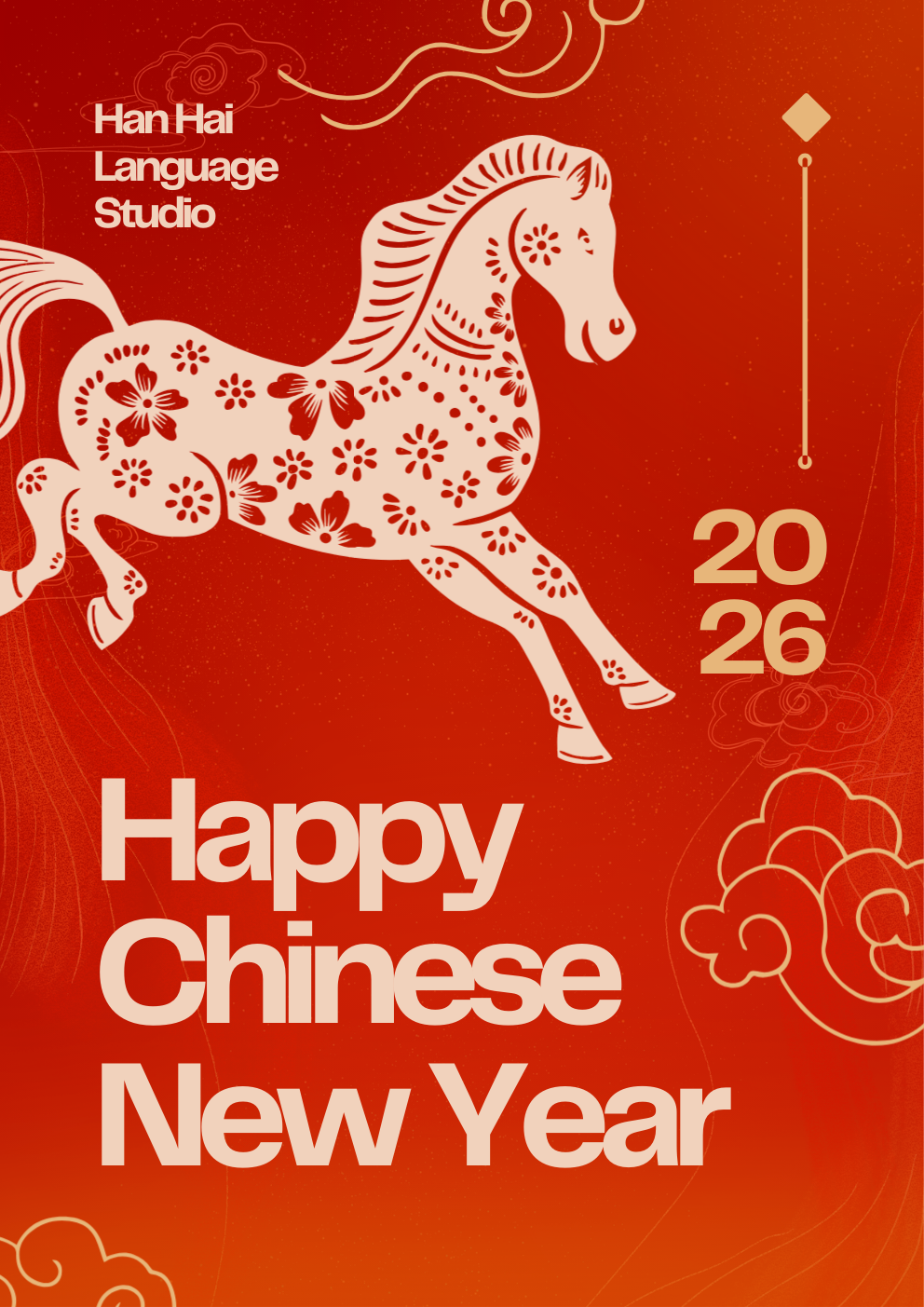
2026 Chinese New Year 马年行大运
2026 marks the Year of the Horse (马年), a zodiac year associated with energy, perseverance, confidence, and forward movement. These qualities make it an ideal theme for introducing Mandarin Chinese to young learners in a joyful and age-appropriate way.
In this article, we share practical Chinese New Year learning ideas for children, introduce useful Mandarin words and sentences, and feature high-quality Year of the Horse resources that parents and educators can use at home or in the classroom.
Why Chinese New Year Is an Ideal Time to Learn Mandarin
Festivals provide a meaningful context for language learning. When children associate Mandarin with celebration, creativity, and family moments, they are far more likely to stay engaged and confident.
Learning Mandarin through Chinese New Year helps children:
Understand Chinese culture and traditions
Pick up high-frequency vocabulary naturally
Learn through art, movement, and visuals
Build positive emotional connections with the language
This approach is especially effective for young learners, beginners, and heritage learners who may not yet be ready for formal textbook study.
At Han Hai Language Studio, we often incorporate festival-based learning into our children’s Mandarin programmes to support long-term language confidence rather than rote memorisation.
👉 Learn more about our children’s Mandarin courses → https://www.hanhai-language.com.sg/chinese-class-for-children
Understanding the Year of the Horse (马年)
In Chinese culture, the Horse symbolises:
活力 (huó lì) – energy
勤奋 (qín fèn) – diligence
自由 (zì yóu) – independence
向前 (xiàng qián) – moving forward
For children, the horse is also a friendly and familiar animal, making it easier to introduce related vocabulary and sentence structures.
Featured Year of the Horse Learning Resources (Chinese New Year 2026)
To support parents and educators, we have selected three child-friendly Year of the Horse resources that align well with early Mandarin learning, fine motor development, and cultural exposure.
🎨 1. 2026 Year of the Horse Colouring Page
Resource link:
https://www.twinkl.com.sg/resource/2026-year-of-the-horse-colouring-page-t-tp-1757594773
Colouring activities are a simple yet powerful way to introduce Mandarin vocabulary in a low-pressure environment.
How to use it for Mandarin learning:

We are proud to be featured by Twinkl Singapore for our Chinese New Year 2026 learning collaboration.
Teach animal vocabulary:
马 (mǎ) – horseIntroduce colours commonly associated with Chinese New Year:
红色 (hóng sè) – red
金色 (jīn sè) – goldPractise short phrases while colouring:
这是马。(Zhè shì mǎ. – This is a horse.)
我在画马。(Wǒ zài huà mǎ. – I am drawing a horse.)
Encourage children to say the words aloud as they colour to reinforce listening and speaking.
🖼️ 2. Chinese New Year – Year of the Horse Display Poster
Resource link:
https://www.twinkl.com.sg/resource/t-t-26088-chinese-new-year-of-the-horse-display-poster
Visual displays help children absorb language subconsciously through repeated exposure.
Teaching ideas:
Talk about the zodiac year:
今年是马年。
(Jīnnián shì mǎ nián. – This year is the Year of the Horse.)Introduce festive greetings:
新年快乐!
(Xīnnián kuài lè! – Happy New Year!)
You can place the poster in learning corners, classrooms, or even at home during the festive season to create a Mandarin-rich environment.
✏️ 3. Year of the Horse Pattern Tracing Activity
Resource link:
https://www.twinkl.com.sg/resource/year-of-the-horse-pattern-tracing-activity-t-tp-1764841495
Tracing activities support fine motor skills, which are essential foundations for future Chinese character writing.
Language integration tips:
Repeat the key word together:
马,马,马 (mǎ, mǎ, mǎ)Model simple action sentences:
我在写马。
(Wǒ zài xiě mǎ. – I am writing “horse”.)
For younger learners, the focus should be on recognition and confidence, not writing accuracy.
Useful Chinese New Year Vocabulary for Children (2026)
Here are some high-frequency Mandarin words related to Chinese New Year and the Year of the Horse that children can easily remember:
Chinese Pinyin English
新年 xīn nián New Year
春节 chūn jié Spring Festival
马 mǎ Horse
马年 mǎ nián Year of the Horse
红包 hóng bāo Red packet
快乐 kuài lè Happy
吉祥 jí xiáng Auspicious
Parents can naturally repeat these words during festive preparations, family gatherings, or activity time.
Simple Mandarin Sentences Children Can Use
Short, practical sentences help children feel successful using Mandarin in real contexts.
新年快乐!
Xīnnián kuài lè!
Happy New Year!今年是马年。
Jīnnián shì mǎ nián.
This year is the Year of the Horse.我喜欢马。
Wǒ xǐhuān mǎ.
I like horses.马很有精神。
Mǎ hěn yǒu jīng shén.
Horses are energetic.
At Han Hai Language Studio, we focus on helping children use Mandarin meaningfully, not just memorise vocabulary.
Making Mandarin Learning Sustainable Beyond the Festival
Chinese New Year is an excellent starting point, but consistent exposure is key to long-term progress.
To support children beyond festive activities, consider:
Regular small-group Mandarin classes
Story-based and theme-based learning
Qualified teachers who understand child development and second-language acquisition
Our programmes are designed for children who are:
Complete beginners
Learning Mandarin as a second or third language
Looking to build confidence in speaking and listening
Final Thoughts: Learning Mandarin Through Culture and Joy
Language learning is most effective when it is meaningful, joyful, and culturally grounded.
By using creative resources such as colouring, tracing, and visual displays, and pairing them with simple Mandarin words and sentences, children can experience Mandarin as a living language connected to real life.
As we welcome Chinese New Year 2026 — the Year of the Horse, may every child move forward with confidence, curiosity, and joy in their Mandarin learning journey.
新年快乐,马年吉祥!
(Xīnnián kuài lè, mǎ nián jí xiáng!)